A saved note can be a reference, an unfinished task, or a record of something that no longer matters. When all three sit in the same active pile, opening your notes means deciding again what each one is for.
A weekly review gives you a place to make those decisions. Start with the notes you added or changed since your last review, plus anything you deliberately left for this week. You do not need to reorganize your entire collection.
The aim is a smaller, clearer set of things to return to. Some notes should stay easy to find. Some need a next step somewhere you will notice it. Others can leave the active pile without being deleted.
Check for follow-up before choosing where a note belongs
Read each note for an unfinished commitment, a question you still need answered, or a choice you are responsible for making. If there is one, write down the next observable action.
"Think about the reading group" is difficult to finish. "Ask the library whether the small room is available" gives you a result to look for. Put that action in the task list or other place you already check, and include a link or reference back to the note.
Name an owner only if that person has accepted the work. For a possible handoff, write "Proposed owner; not confirmed." Add a due date when one has been agreed; otherwise leave it unset. Reviewing a note does not turn every idea into an obligation.
A note can need action and still be useful reference. Extracting a task is the first check, not a reason to discard the source.
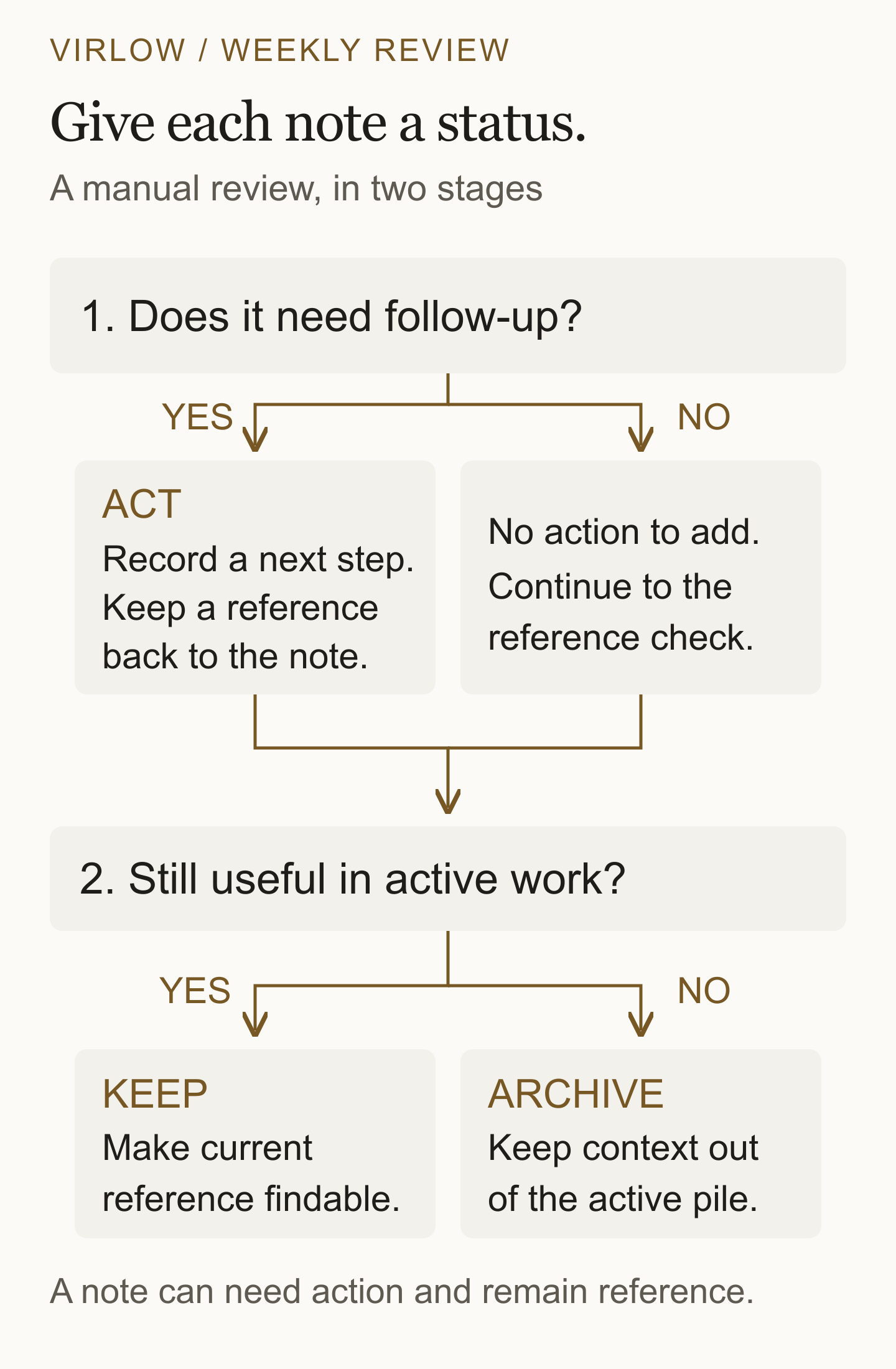
Both paths through the first question lead to the second. An action can come from a note you later archive; keep enough context with the action to find that source again.
Keep reference that still has a purpose
Ask what would make you open the note again. A current project decision, instructions you still use, and a source you expect to cite all have a reason to stay findable.
Give the note a title that says what it contains. "Library room options, current shortlist" is easier to distinguish from an old booking confirmation than "Useful links." If the answer or recommendation has changed, mark which version is current and point to the replacement.
Do not rewrite every note during the review. Fix the detail that would make the next visit confusing: a missing source, an unexplained abbreviation, or a conclusion that no longer follows from the latest information.
For an active project with decisions scattered across several notes, a short summary can point to the original records. The project-note template gives you labels for decisions, ideas and unanswered questions without treating them as the same thing.
Archive what has left the active work
A completed event, a replaced plan or an idea you have decided not to pursue does not need to compete with current work. Move it out of your active collection using whatever archive convention your note system supports. That might be a folder or a clearly marked section.
Keep a short explanation when the old note could otherwise mislead someone: "Superseded by the September shortlist" or "Event completed; retained for the venue contact." Preserve a route to the replacement if there is one.
Archiving here means retaining a record outside the active pile. It does not mean deleting the content, removing access to it, or changing how a service stores it. Handle sensitive information according to your own retention and access requirements, separately from this organizing exercise. If you plan to send notes to an AI assistant during a review, read what happens to private notes when you connect an AI assistant before sharing them.
If you cannot tell whether a note still matters, leave a specific question for the next review rather than assigning it a permanent "maybe" category. "Check whether the venue deposit was refunded" is a reason to return; "Review later" is not much of one.
A fictional before-and-after example
The reading group and all details below are invented. This is a manual organizing example, not a report of a Virlow feature or a tested customer workflow.
Before the review, three notes sit together:
Reading group ideas
- Ask about the library's small room.
- Maybe invite a guest speaker someday.

Useful links
- Current reading list, with source links.
- Notes on why these books were shortlisted.

Old room plan
- Cafe booking for last month's completed meeting.
- Venue contact and accessibility details.
After the review:
ACT, then KEEP: Reading group venue options
- Task in my task list: Ask the library about room availability.
- Owner: Me. Due date: not set.
- Task reference: Reading group venue options note.
- Keep the room research with this active project.
- Guest speaker remains an idea, not an assigned task.

KEEP: Reading group shortlist, current
- Retain source links and selection reasons.
- Title now identifies the contents and current status.

ARCHIVE: Previous reading group meeting, cafe venue
- Meeting completed; no remaining follow-up.
- Retain for venue contact and accessibility reference.
The first note has two outcomes: an action and a place in current reference. The last note still has useful history, but it no longer belongs beside the next meeting's planning work.
A checklist for the next review
- Open the notes added or changed since the last review, plus any notes you set aside to revisit.
- Read for unfinished commitments. Record the next action where you will check it, with a reference back to its source.
- Confirm owners and dates rather than inferring them from suggestions.
- Keep current reference findable. Repair unclear titles or mark a replacement where needed.
- Archive inactive records with enough context to explain their status. Check for unfinished follow-up before moving them.
- For anything unresolved, write the question you need to answer and choose when to revisit it.
Stop when the selected notes have a clear status. You can leave the older collection alone until a particular project or question gives you a reason to review it.